
OSMOS started as an experimental project space from 1997 to 1998 in Berlin and was re-established in 2012 in New York as a publisher of art books and an “art magazine about the use and abuse of photography.” Around 2018, OSMOS began representing artist estates (Gretchen Bender, Darrel Ellis, Anton Stankowski, and others) and since 2020, OSMOS has regularly participated in art fairs in a form that more closely operating as a gallery. OSMOS has developed a particular expertise in handling artists’ estates and reintroducing historic positions, especially constructivist tendencies, photography, and works by women artists. OSMOS also works with younger artists that reinvigorate historic legacies we champion. For this first time participating at Art Cologne OSMOS is offering a presentation that represents several core concepts of the gallery: the reintroduction of historically significant positions, often by women artists; expanded lens-based practices; and the continuation of histories of constructivism and abstraction.
HALL 11.2 N 030
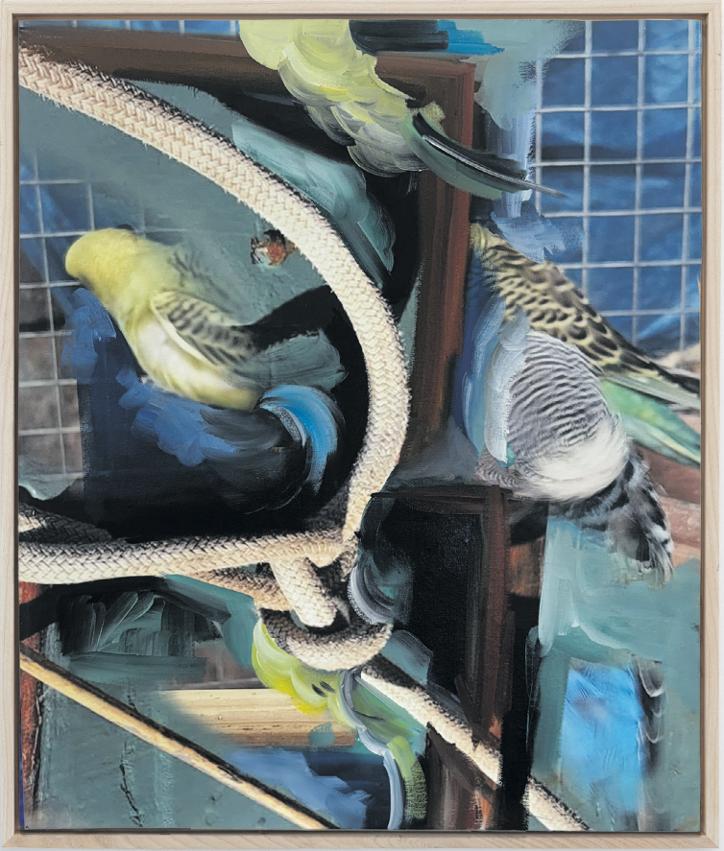
Kate Steciw, Budgie Blitz, 2026, oil and inject on canvas mounted to panel, 30×24 in, Courtesy of Osmos
Kate Steciw: Pictures
The practice of Kate Steciw (*1978 Bethlehem, Pennsylvania) is defined by a “continual effort to cope with the perceptual crisis precipitated by image overload” (Steciw). She is drawn to forgotten, authorless or “poor” (Steryl) images; stock photography, screengrabs and internet downloads as well as vast stores of her own personal images frozen in perpetual storage. Whether she’s working with editing software or by hand, Steciw layers and juxtaposes seemingly disparate images (and sometimes objects) to create works she refers to as “composites” that remain uncomfortably uncontai-ned by categories such as photograph, painting, or sculpture.
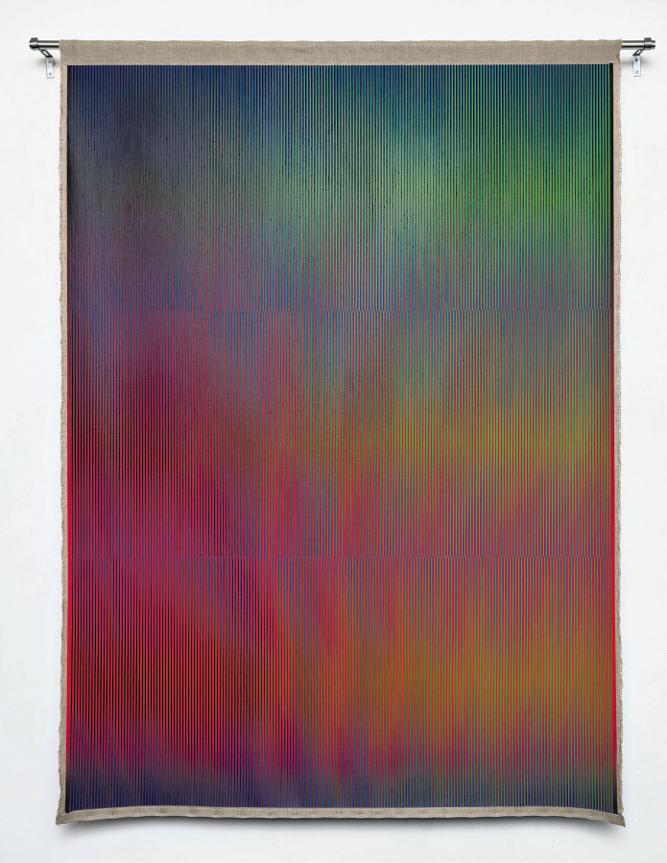
Ivan Prerad, BGR III, 2026, oil and wax on canvas, 220×160 cm, Courtesy of OSMOS
Ivan Prerad: RGB Paintings
Ivan Prerad’s (*1988, Zagreb, HR) structural, enigmatic works on linen transform thin lines of primary color into waves of RGB scale transformations that recall perceptual illusionism and the history of colour-theory-based composition. Prerad connects with local (Croatian) traditions of concrete, kinetic and op art, particularly the 1960s movement of New Tendencies (1961 – 1972). New Tendencies bridged the optical experiments of early 1960s abstraction with the first computer-generated compositions of the early 1970s, and was situated, in the words of art historian Armin Medosch, “at the threshold of the information revolution.” Prerad reimagines these histories by using a mathematically precise, technically rigorous painting vocabulary to allude to the digital color formats of RGB, used in monitors and televisions.
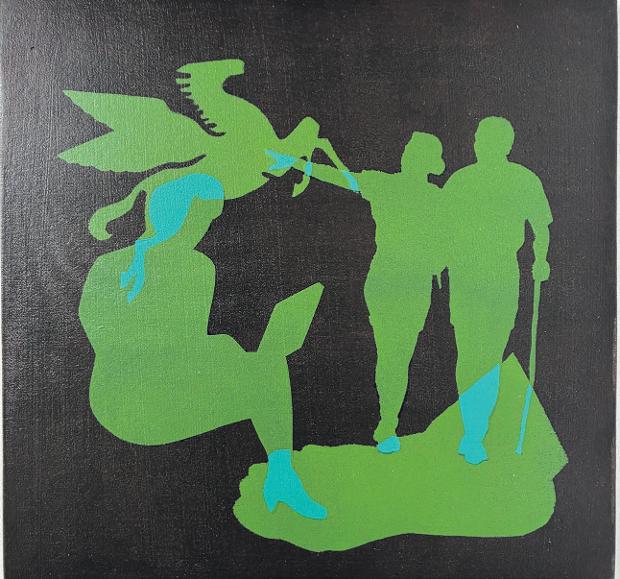
Adam Simon, Mobil, 2026, acrylic on canvas mounted on wood panel, 14 x14 in, Courtesy Osmos
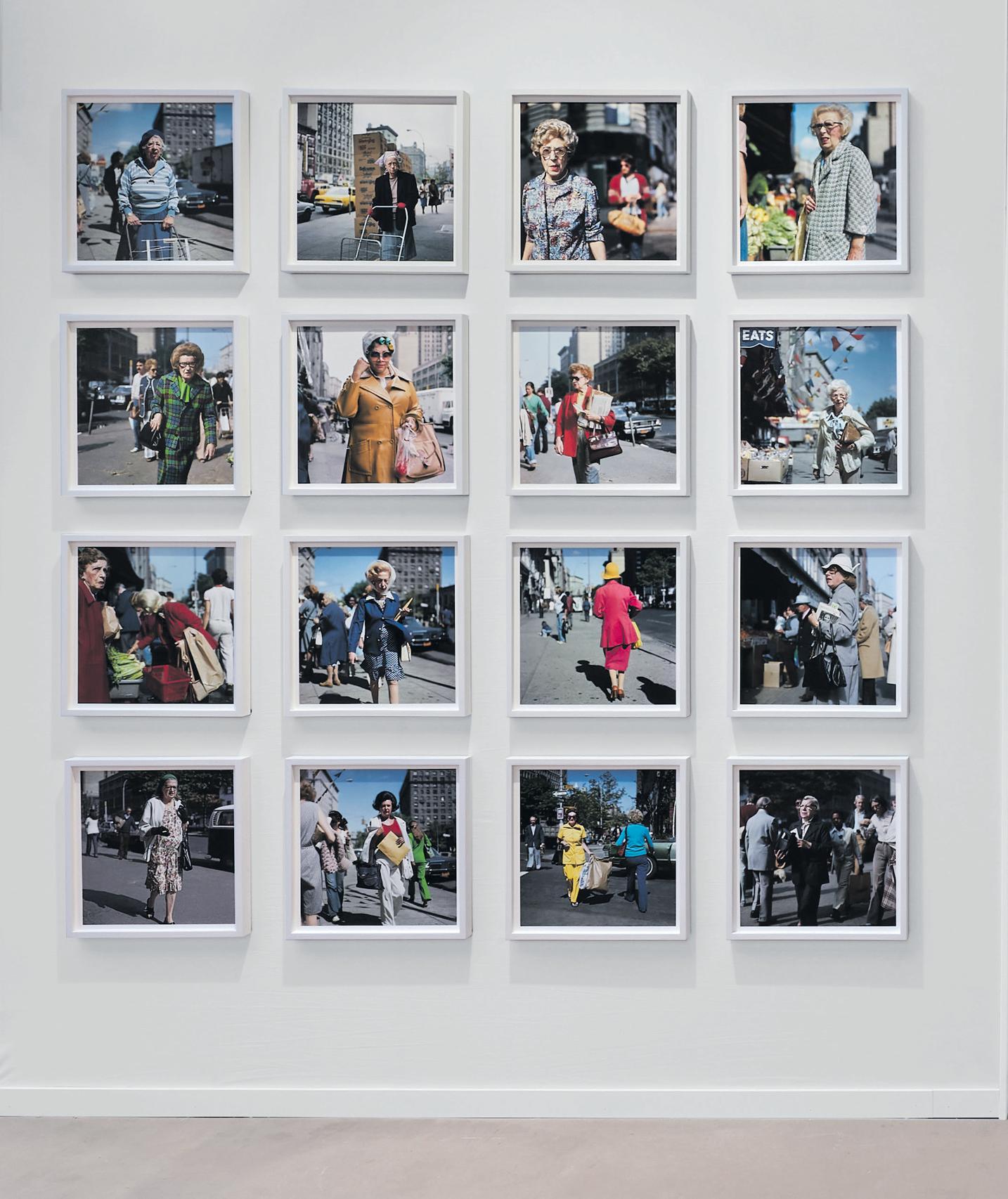
Catherine DeLattre, From the series: Shoppers, Broadway, Upper West Side, NYC, 1979-80, installation view of 16 photographs, each 15×15 inches. Courtesy of OSMOS
Catherine DeLattre: Shoppers, Broadway, Upper West Side, NYC, 1979-80
Catherine DeLattre (*1949) grew up in Monongahela, Pennsylvania, a small town near the heavily industrial area of Pittsburgh.1979 through 1980, she went out to shoot almost every day 120 Kodak color negative film with a TLR Mamiya. DeLattre focused on the colourful, eccentric, mostly elderly women that shopped and lived in that neighborhood. In the artist’s words, “they looked so put together with makeup, outfits, and hairdos but at the same time so vulnerable. I related to that. I loved how they dressed up to go to the bank and the grocery store and run everyday errands.”
— Cay Sophie Rabinowitz