Louis-Cyprien Rials is a French multidisciplinary artist and a specialist in geopolitics, particularly that of the former Soviet Empire, Central Asia, and the Middle East.
He spends much of his time travelling alone across the globe, often by motorcycle, through countries where the only Westerners he encounters are adventurers, war correspondents, and perhaps a few spies. He enjoys this unconventional, disorienting world of outsiders, but it pales in comparison to the dialogue he establishes with local populations. Above all, he is interested in the human, spiritual, and aesthetic dimensions of the countries he travels through, some of which he calls home for several months at a time.His cultural background and rudite knowledge of Judeo-Christian mysticism have opened doors for him everywhere, from Riga to Mosul, and as far afield as Ethiopia and Uganda. Today, his primary aim is to meet people and discover their ancestral forms of devotion, their everyday lives, and their aspirations.
This empathetic approach was preceded, earlier in his artistic development, by a deep-seated interest in landscape. Louis-Cyprien Rials recalls experiencing his first artistic revelation at the age of six, at the Opificio delle Pietre Dure Museum in Florence, founded by a Medici duke in the late sixteenth century. There, he encountered pieces of furniture inlaid with paesine—polished stones whose natural patterns evoke mysterious landscapes. Admired for their strange and unusual forms, these stones have been collected for two thousand years.
Since the beginning of his artistic career, the mineral world has therefore served as the guiding thread running through his work. His most recent journeys have taken him to Africa and the Middle East, through landscapes that are mostly arid and rocky, where stone is both an unavoidable reality and a noble material, carved and sculpted to create countless architectural wonders embodying spirituality and power.
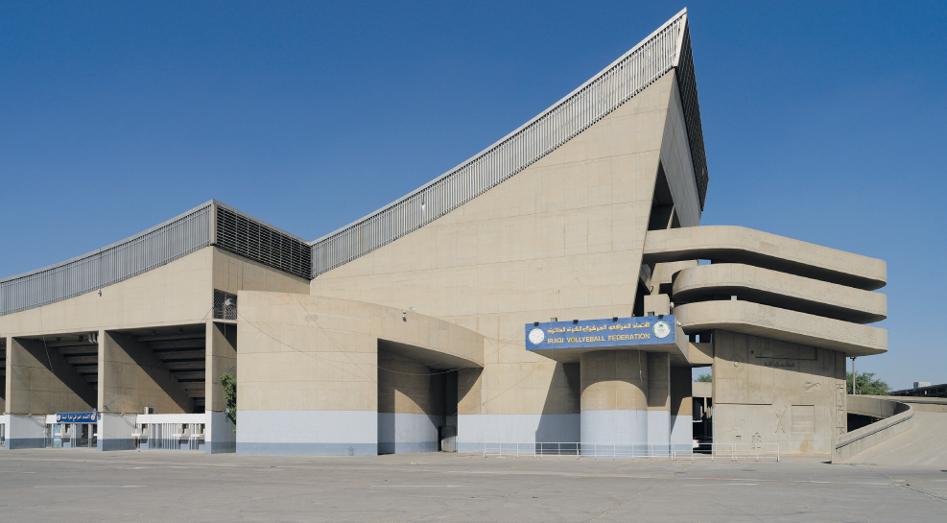
Yet behind these images of an idealized Orient—the reed houses of the Mesopotamian marshes, the ruins of Palmyra, the Ziggurat of Ur, and even the little-known gymnasium designed by Le Corbusier for Baghdad—the artist has discovered men and women, injustices, prisons, greed, territorial conflicts, the Old City of Mosul destroyed by Daesh, and countless absurdities perpetrated by local and Western leaders.
Throughout his travels, Louis-Cyprien Rials observes all of this, experiencing both the best and the worst of humanity. He identifies the traces of state scandals that have left entire populations and territories devastated, then addresses them directly in his work.
In Iraq, where he spent a considerable amount of time, he successively immersed himself in a variety of disparate social groups, notably young actors, poets and musicians, as well as a disability football team. From the former, he encountered a deep attachment to the history of ancient Mesopotamia, which, nearly 3,000 years ago, demonstrated its power by erecting monumental sculptures at the entrances to its cities: colossal alabaster creatures with the bodies of bulls, human heads, and eagle wings. Examples from Khorsabad can now be found in the Louvre.
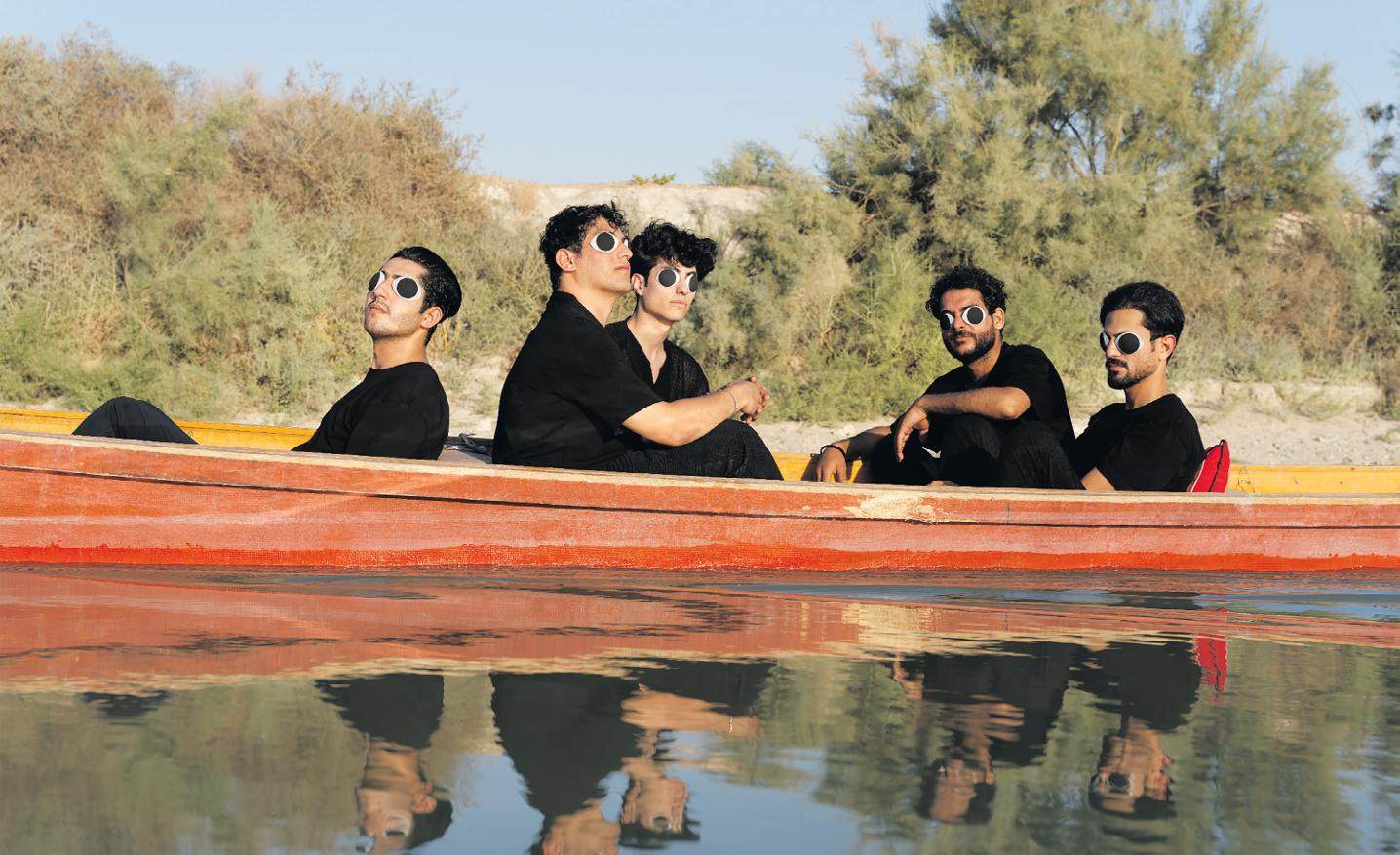
These young people write in cuneiform and sing ancestral songs accompanied by reconstructions of ancient musical instruments, seeking to reconnect with a glorious and cultivated past that two centuries of Western oil-driven greed have reduced to nothing. Louis-Cyprien Rials followed them far beyond the city, into the marshlands, to create Oyouni (2023), a series of photographs and videos in which he adorned them with the same eyes of lapis lazuli and mother-of-pearl that once brought to life the stone dignitaries of the temples of Ishtar during the early dynastic periods.
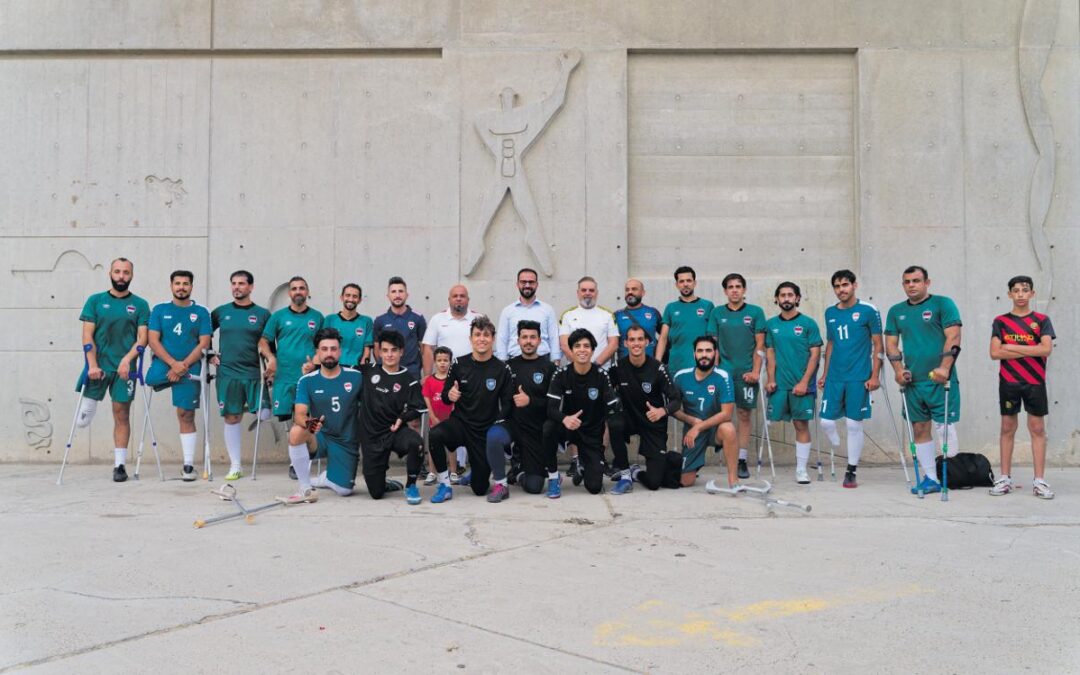
Of footballers who had been disabled by landmine explosions, the artist made deeply moving films during training sessions in the gymnasium designed by Le Corbusier. Far from any suspicion of cynicism or bad taste, Louis-Cyprien Rials had the group of athletes pose in front of the building’s façade for his photographs as an act of denunciation, drawing attention to injustice and the absurdity of their circumstances. The façade is ironically adorned with the stylized figure of a healthy, triumphant human being, represented by the Modulor. He also recalled that the building had served as a detention centre for ordinary criminal prisoners during the American occupation. Untitled (2024)
a reporter, whose role is to describe, analyse and explain. In his artistic work, he does not depict the pollution, ruins, trampled beliefs, looted museums or massacres he has witnessed. Increasingly, it is the people themselves who become the subjects of his videos and photographs. His works are restrained and discreet, never sentimental or sensationalist. For those willing to take the time to contemplate them, they invite curiosity and reflection. His contemplative videos hold our attention until a sudden realization jolts us into awareness: this contemplation is merely an illusion, concealing something grave, often the consequences of two centuries of Western imperialism.The sudden realization mentioned above sometimes arises from a sense of the absurd and the art of subversion, in which the artist excels.
Elevating an ordinary tourist tank top to the status of an artwork, emblazoned with the slogan “I Love Mogadishu” and sold by street vendors outside his hotel in one of the most dangerous cities in the world (where, of course, there are no tourists), serves to draw attention to the oppressive weight of the military presence and the poverty prevailing in Somalia. Subverting an act of subversion in turn exposes the absurdity of certain human situations, and the artist enjoys employing this form of synthesis.
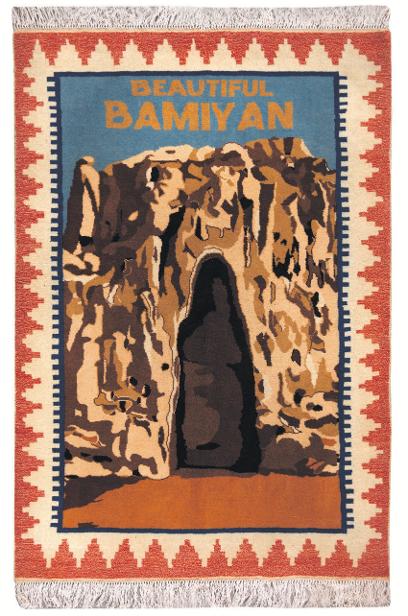
Taking inspiration from Afghan weavers, who adapted their trade to the occupation of their country by producing “war rugs”—intended to be taken home by occupying soldiers as typically local souvenirs—Louis-Cyprien Rials has created a series of new motifs to replace the now-traditional depictions of helicopters, bullets, Kalashnikovs and tanks. Unlike the “war rugs” intended for the victors, the artist’s rugs are like pebbles in our shoes: they evoke more obscure geopolitical issues, such as the opium trade, the Uzbin ambush, in which ten young French soldiers who should never have been there were killed by the Taliban, and the destruction of the Buddhas of Bamiyan (Beautiful Bamiyan, 2023).
Born equally early, during his first visit to Florence,Louis-Cyprien Rials’s profound intellectual curiosity about the notion of the truthfulness of vision informs his entire body of work. Observing stones whose simple, random natural striations form images of seascapes or rugged cliffs, without regard for proportion, led him to recognize how fragile the value of images is, as is our ability to interpret them. This question of truth, already dizzying and traditionally the preserve of philosophers when Louis-Cyprien Rials was six years old, hassince become part of everyday life with the advent of artificial intelligence.
The paradox of having literally to dig into the landscape to extract rare metals used to manufacture machines and applications capable of generating fictional images of landscapes offers Louis-Cyprien Rials new ground for exploration. For the question of landscape, whether real or fictitious, remains the guiding thread through which his work is woven.
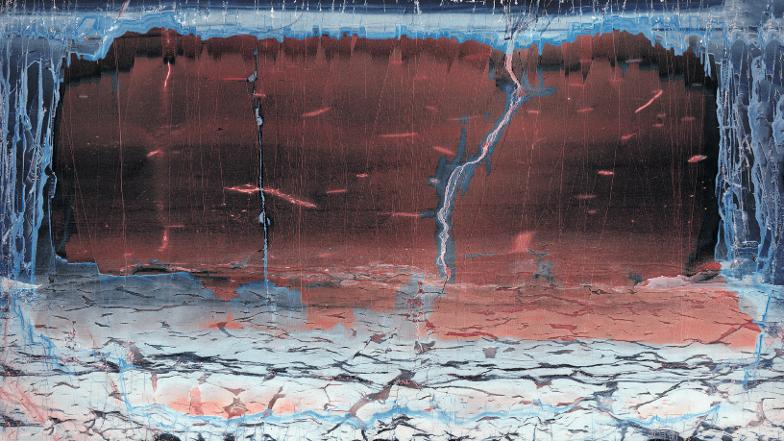
Finally, when he returns to Europe after several exhausting months spent in the field among people he loves, whose lives are a daily struggle, he finds rest and release through a process of mise en abyme—a reflection within a reflection. Far from mineral landscapes, he invents new paesines on his computer screen. Starting with tiny stones in reality, he creates large-scale photographic prints of landscapes featuring waves, storms or empty theatrical scenes devoid of any living presence. He transforms their scale and colours to heighten their dramatic and artificial qualities. Remarkably faithful to reality yet painterly in appearance, these paesines are both the reawakeningof his emotional response to Florence and the beginning and culmination of an entire artistic life devoted to compassion.— Eric Mouchet
Opposite page: top Footballteam and the gymnasium designed by Le Corbusier, 2024, 8,6×10,8cm, photo Bertrand Michau; below The gymnasium designed by Le Corbusier, Bagdad, 2024, 120x180cm, photo Louis-Cyprien Rials; this page top: Oyouni Boat 02, 2023, Edition 2 of 3, 80 x 120 cm, photo Louis-Cyprien Rials; right: Beautiful Bamiyan, 2023, 158 x 100cm, photo Bertrand Michau; below:The Beginnings of Hollow Earth, 2021, 130x190cm photo Bertrand Michau