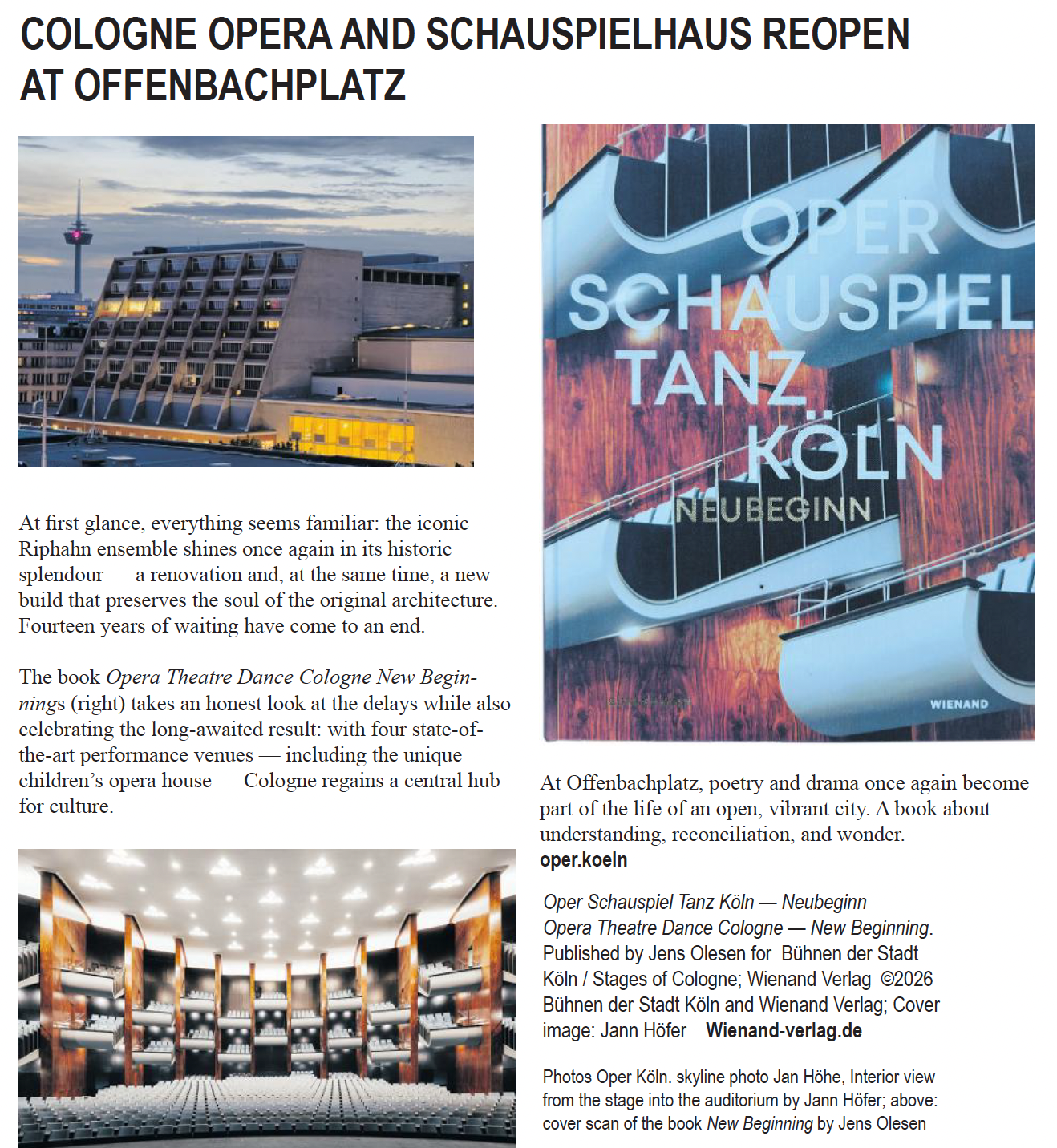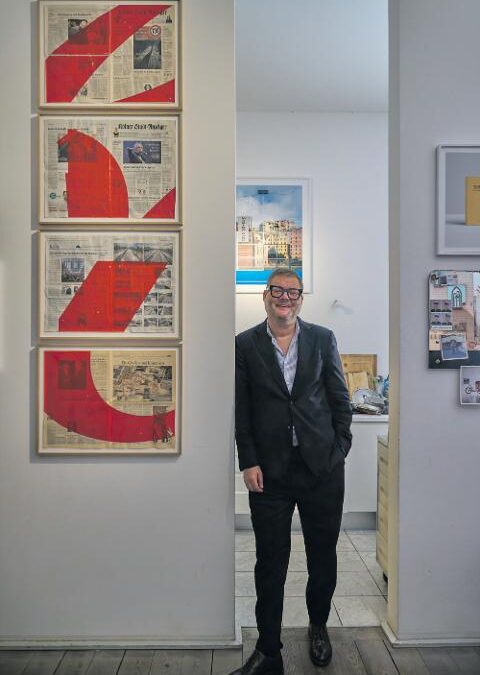
Austrian conceptual artist Merlin Bauer addresses
society vertically, theoretically, publicly and practically, to the point that one of his installations has become a permanent part of the city’s skyline and an emblematic landmark of Cologne.
”Arriving from Graz in 1999 I was still very engaged with the phenomena of ‘internet radio’. Then, in the wake of the first financial crisis I started new collaborations, including Under the Pavement, the beach — Temporary Spaces (Unter dem Pflaster der Strand – Momentane Orte),” with the architecture firm ‘BeL‘ (Anne-Julchen Bernhardt und Jörg Leeser).“
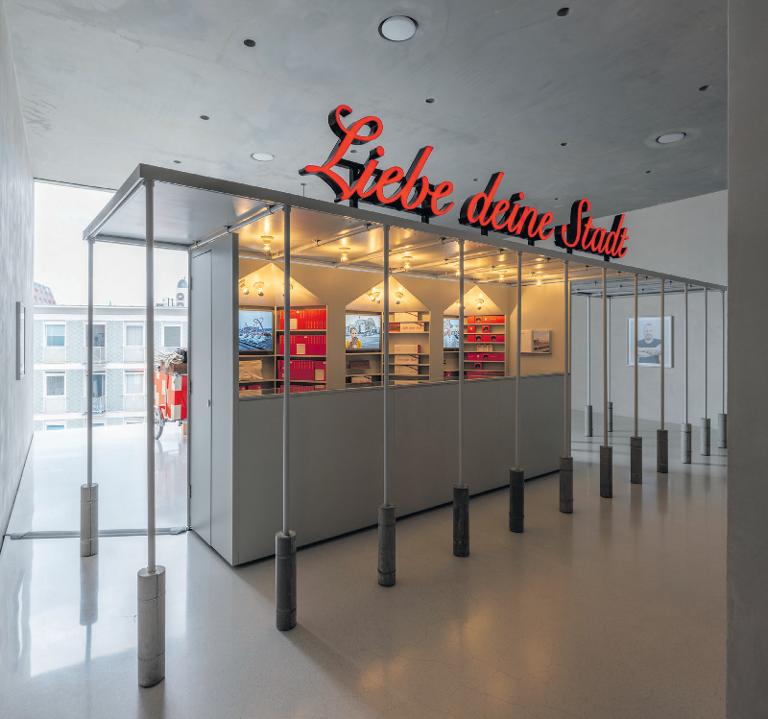
In 2005 Bauer topped this success with his most recognized work to date: Love thy City / Liebe deine Stadt.” In giant lettering, cursive, red, this social sculpture functions as an imperative, more than a suggestion, it is a request to care about your neighbour as well as your environment. A social sculpture as per Beuys’ definition in itself, it invites everyone else to participate.
“Kasper König unveiled it to the public, together with Hans Schilling, Cologne’s leading architect of the postwar reconstruction, who also built the beautiful Neu St Alban Church just around the corner from my studio. In recent years the subtitle ‘Architecture and Democracy’ was added as a result of its engagement with post-war modernist architecture.”
Bauer’s latest body of work has taken him all across
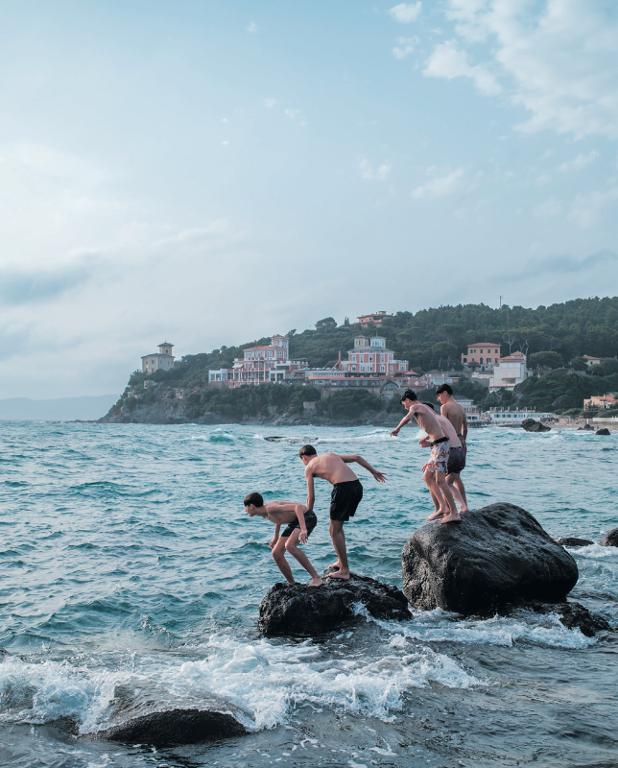
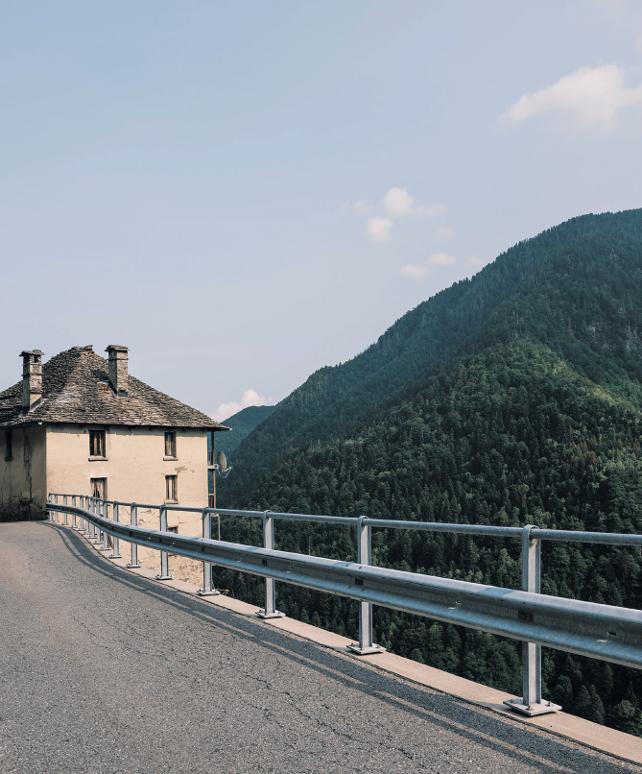
Europe. “I’ve just presented my new photography project Grand Tour at the photo festival Les Rencontres in Arles, the largest remaining Roman agglomeration outside of Italy. The exhibition and book launch were held in a historic building near the arena. The name ‘Grand Tour’ refers to the journeys historically undertaken by young, aristocrats from England, travelling to Rome (and later to Athens or Sicily) to further their education. I took this subject as a loose guide to investigate the changes in our landscapes and cities in a photo-essayistic manner. “
“Recently I realized that my early ‘Strandbox’ project was a sort of small scale ‘Petit Tour’ where we travelled in an inner city range with the idea of bringing people together. The photographic format ‘Grand Tour’ naturally creates a distance, but in Arles we managed to turn it into a social sculpture with my friend who was cooking for 10 days straight for visitors from the world over.”
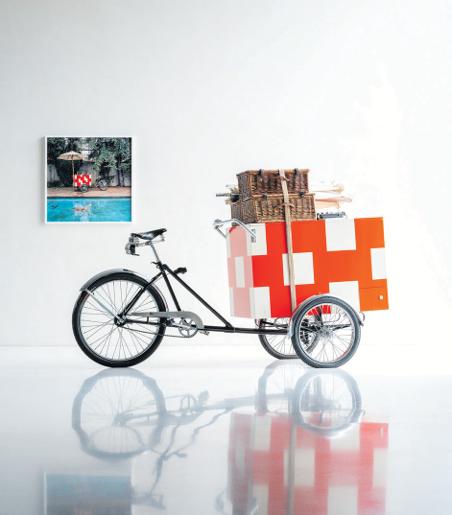
“This engaging innercity exploration project had as its base a travelling Strandbox.The icecreambike (Eisver-käuferfahrrad) is a tricycle featuring a large cooling box covered in a pattern inspired by Le Corbusier’s wallcoverings in the ‘Cologne colours’ of red and white and sound from a FM pirate radiostation. “We set out to animate ‘lost’ or ‘forgotten’ places in town with assorted drinks, food and music inspired by the location creating a special social environment for one evening at a time, as far as the sound would reach. We organically attracted a large following, starting with accidental passerbys.”
Cologne Opera (Köln Oper) and main theatre (Schauspielhaus), reopen at Offenbachplatz
The striking modern design of the opera and main theatre complex in Cologne was conceived in 1953 by architect Wilhelm Riphahn (1889-1963) as part of the postwar endeavour to renew German society with a people focused approach to urban architecture. Opening in 1957 (opera) and 1962 (theatre) respectively, in the setting of ‘Offenbachplatz’, a large open square complete with the Opernbrunnen (mosaic fountain, inaugurated 1966) by Jürgen Hans Brümmer. Together they form the heart of the ‘stages of Cologne / Bühnen der Stadt Köln’.
Having fallen into heavy disrepair by the early 2000s – and the prime location being eyed up for a shopping mall by developers – Cologne artists with Merlin Bauer at the fore joined the citizens’ initiative to stop the demolition of the cherished buildings, when landmark status clearly didn’t protect them. Yet it took the harrowing disaster of the collapse of the Cologne City Archives (claiming two lives and 90% of Cologne’s historical documents), for the city to turn around and follow its citizens’ demands
to preserve the meaningful site.
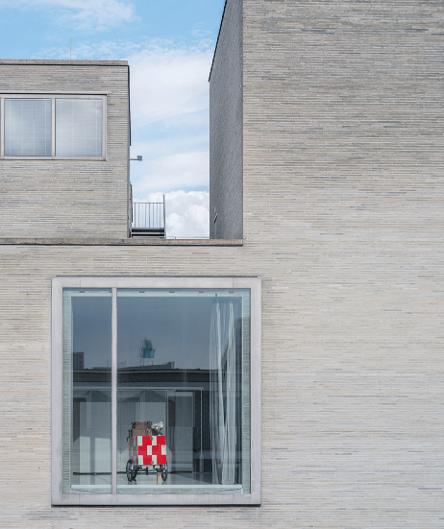
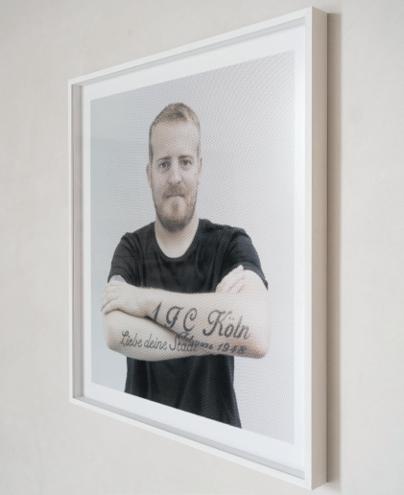
Clockwise: photo: Mark Záhorszky; all at Kolumba Museum, Liebe deine Stadt-Museum, Strandbox, Liebe deine Stadt x 1. FC Köln 1948 / Einschreibungen I, Strandbox (Mittelmeergarten)
all images
© Merlin Bauer / VG Bildkunst Bonn
This October the opera / theatre complex finally reopened in its original 1950s design with an invisible state-of-the-art modern sound and stage set up. After 14 years of debacle and astronomically overrun public spending, the moment of renewed splendour has at last arrived. The fact that we can celebrate the reopening of this social monument with its profoundly democratic design in a 2026 where those ideals are again crucially endangered, does not go unnoticed. “… particularly now in 2026 – when the word ‘fascism’ is very much on everyone’s lips across the world – the fact that we’re now refocusing on this social architecture, and on community-building, citizens’ right to have a say, equality and so on, makes it a very good political point to be emphasising precisely this today, in contrast to the current climate.” Merlin Bauer elaborates. “Fundamentally, architecture is indeed a social task; that means we can start with the issue of housing – a topic that concerns us all – and ask to what extent housing is still affordable.” — Merlin Bauer and Uscha Pohl in conversation
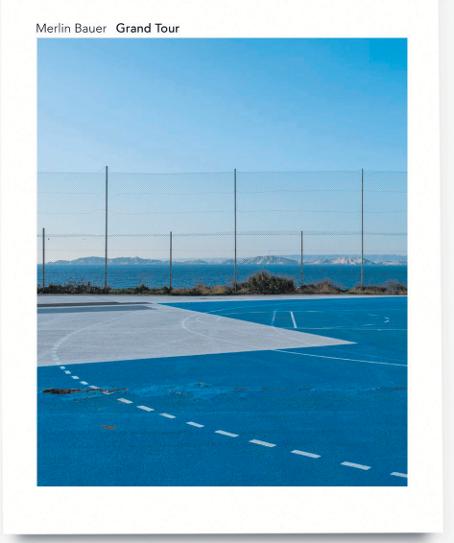
LE GRAND BLEU Special Pop-Up-Show and Book Launch 7+8 November 2026 Showroom Fotografie Simone Klein Gutenbergstraße 48 | 50832 Köln Saturday, 7. November 15:00 – 18:00
Presentation of the photo book »Grand Tour« (Hartmann Books) by Merlin Bauer and launch of the special edition Sunday, 8. November 12:00 – 16:00
14:00 – Artist talk with Merlin Bauer and the author and architect, Prof. Jörg Leeser PBSA Düsseldorf/BeL)
> Grand Tour« Merlin Bauer (Hartmann Books)
Texts by Magdalena Holzhey, Simone Klein, Jörg Leeser; Deutsch/English/Français ISBN 978-3-96070-149-1
Images from the series Grand Tour, Castiglioncello IV, Comologno I, Marseille IV (Cover)
© Merlin Bauer / VG Bildkunst Bonn.