
La Seu, Palma’s striking gothic cathedral rises between the Royal Palace of La Almudaina and the Episcopal Palace of Mallorca, overlooking the sea from the walls of the historic harbour fortifications. Situated in Palma’s old town right on the site of ‘Madina Mayurqua’s’ largest mosque, works on the Cathedral had begun soon after the the city was conquered by King James I in 1229. Construction however continued through the 17th century and significant restorations were overseen by Antoni Gaudì in the 20th century and more recently by Miguel Barcelò.
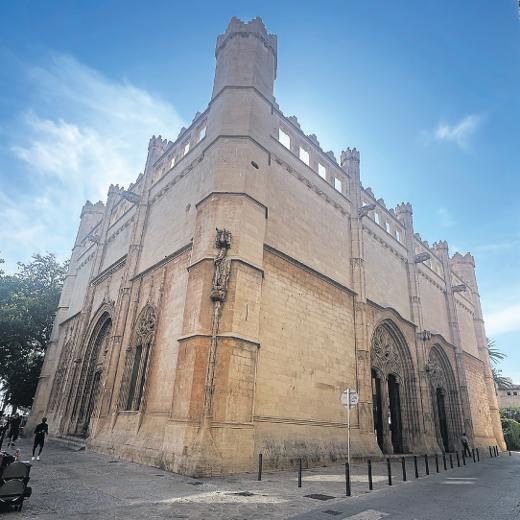
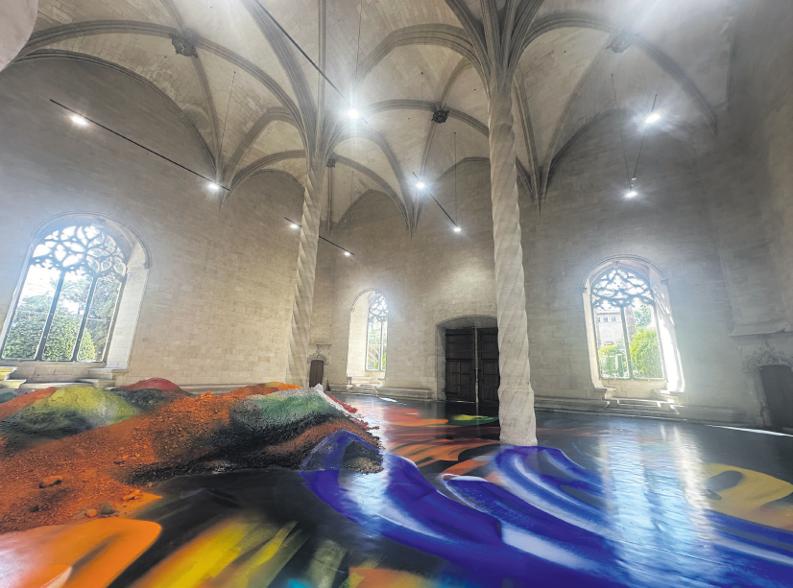
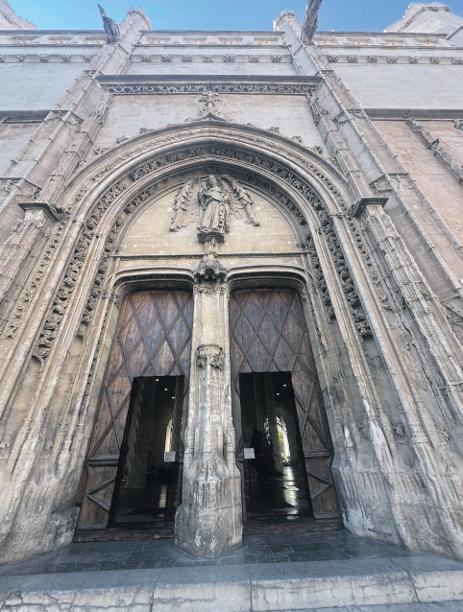
Just half a mile East along the shore sits another prime example of gothic architecture in the Mediterranean. La Llotja (‘The Lodge’) was commissioned by the Balearic government in the 15th century as heaquarters of the College of Merchants and from 1426 built by Guillem Sagrera (sculptor and architect of the cathedral‘s Portal del Mirador), but was completed by Guillermo Vilasolar in 1452. The remarkable cubic building comes complete with twin turrets, gargoiles and the ‘Angel of Merchants’ guarding the main portal. The impressive rectangular hall is anchored by four octagonal towers in each corner with the vaults supported by a formation of spiralling columns. La Llotja has had many functions, starting in 1452 as seat of the Maritime Trade Exchange and administrative heart of the bustling port and its trade activity.
With the local nickname ‘gothic temple of art’, today La Llotja is managed by the Balearic Islands, hosting
exhibitions of international artists including Rebecca Horn, Julian Opie, Jaume Plensa, Joan Miró.
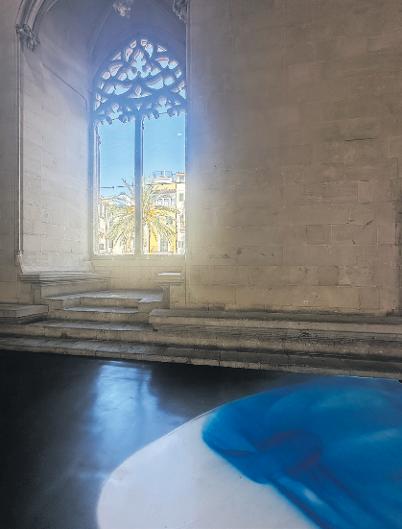
Until 31 January 2027, with her exhibition ‘Arrels’, it is German artist Katharina Grosse who has transformed the space into a walk-in spray-painted sculpture of its own. For an immersive multisensory experience she has brought in rock, earth and a large fallen tree, roots up in the air, as base for her rushing storm of colour. With candid streaks of paint gushing in waves or rising as dunes, the installation blends rawness and immediacy with notions of both the prehistoric and the futuristic in this arresting historic setting.
Katharina Grosse, (*1961, Freiburg/Breisgau, Germany) divides her time between Berlin and New Zealand. Taking the world for her canvas, Grosse is renowned for explosive colour scapes challenging the conventions of contemporary art with large scale in-situ- works that cannot be bought, sold or owned.
Performative creation meets the experience of the vistor entering the field, with the immersive sensory information shifting the perception of space and object. Presenting radically free flow expression in an ephemeral format, Grosse doesn’t limit herself to painting.
First meeting Düsseldorf based musician Stephan Schneider in the early 90s at the Art Academy Düsseldorf – Grosse was studying painting under Gotthard Graubner and Schneider photography with Bernd and Hilla Becher – they collaborate on atmospheric sound projects since 2008. For Katharina
Grosse’s monumental exhibition Wunderbild, Deichtorenhallen, Hamburg, 2025, they created specific sound fragments, each 20 seconds: long enough to ‘register’ with the visitor, short enough to retain an element of surpise and spontaneity ‘like a gust of a wind – akin to when you open a window’.
At La Llotja, Grosse’s intervention interacts not only with the historic gothic architecture but also the mediterranean sun which adds a spectacular level of intensity to the already bright work. While at La Seu the sun projects colour through a 14m diameter rose window onto the stone interior in a daily cycle, Grosse has an 8 month window to let her colour shine and bedazzle within La Llotja’s historic walls of exchange. The title Arrels meaning ‘Roots’ in Catalan may refer to our roots in nature, ursurped by mankind, with the (dead) tree uprooted, transformed, and the viewer transported into a multicoloured sphere if its own; and similarly the building’s and the people of Palma’s historical roots where successful trading via the sea meant exchange, interaction, a multitude of supplies, power and prosperity, which comes in all colours. —Uscha Pohl
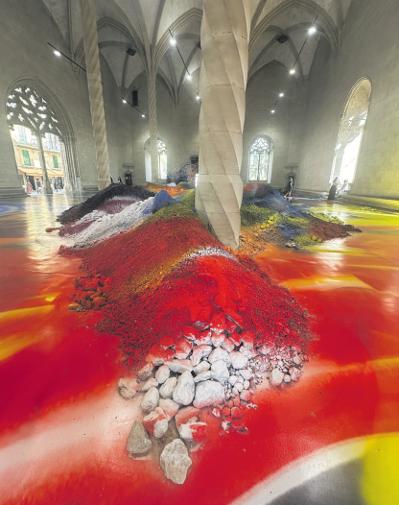
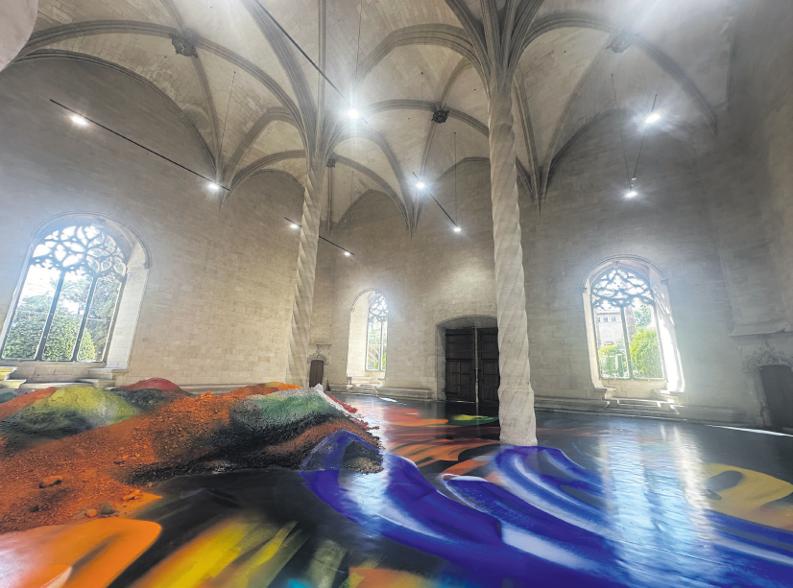
Katharina Grosse, Arrels, curated by David Barro
co-production between the Government of the Balearic Islands and Es Baluard Museu La Llotja de Palma, Plaça de la Llotja, 5, 07012 Palma,
Illes Balears. Through 31 January 2027.
Photos Uscha Pohl